Should You Sell First or Buy First? (The Real Answer)Everyone has an opinion on this.Your neighbor says sell first.Your coworker says buy first.Your aunt who bought a house in 1987 has very strong

Dated: July 9 2026
Views: 199
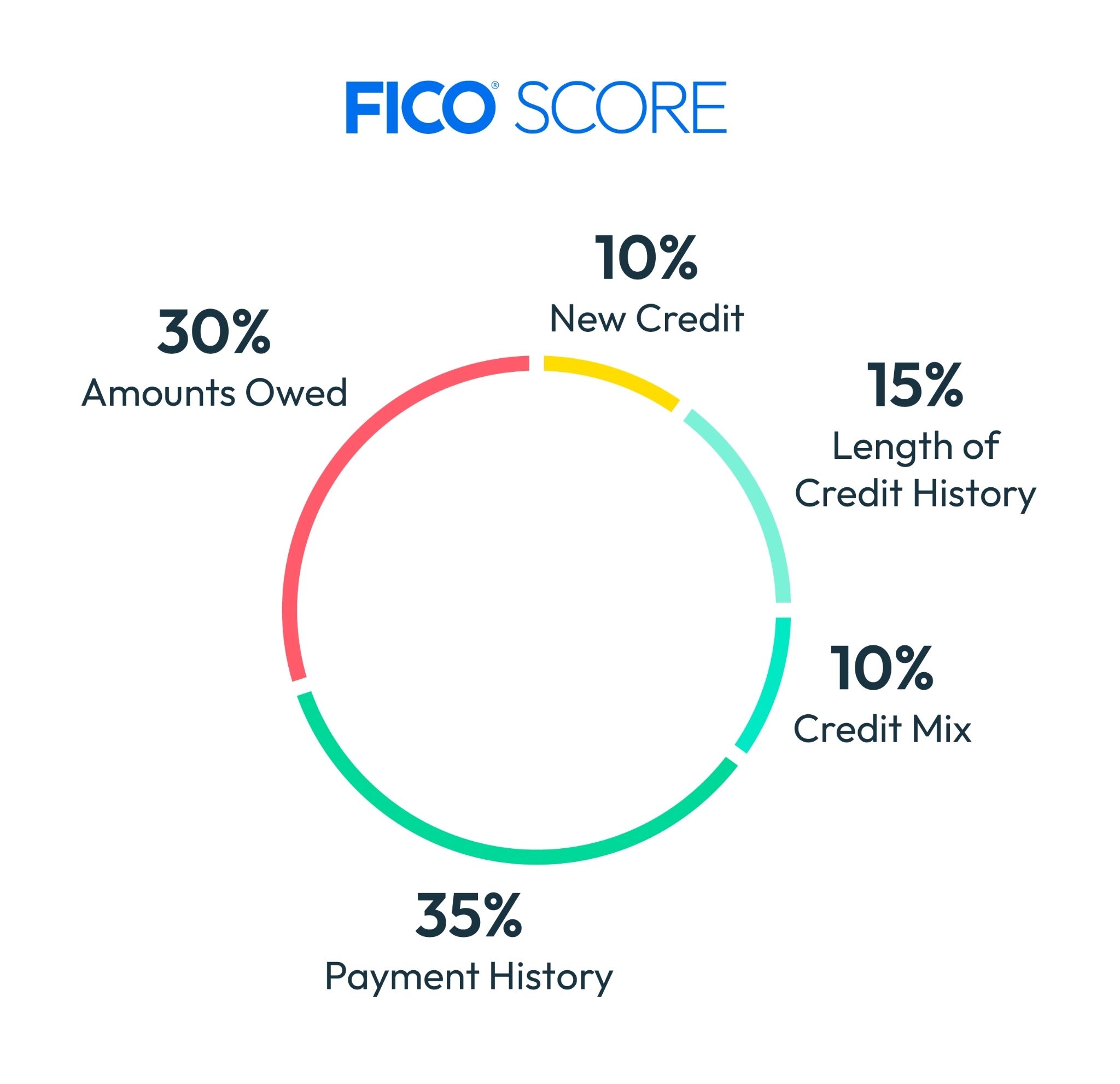
To effectively manage your credit, it helps to understand exactly how your score is calculated. The standard FICO scoring model relies on five primary components, each carrying a different weight:
Payment History (35%): This is the single largest factor in your credit profile. Lenders prioritize whether you pay your bills on time. A single payment that is 30 days past due can cause an immediate and significant drop in your score.
Amounts Owed / Credit Utilization (30%): This represents how much of your available credit you are actively using. If you have a total credit limit of $10,000 across your cards and you owe $3,000, your utilization rate is 30%. Lower utilization rates signal to lenders that you are not overextended.
Length of Credit History (15%): This looks at the age of your oldest account, your newest account, and the average age of all your accounts combined. A longer track record gives lenders more data to judge your financial consistency.
Credit Mix (10%): Lenders prefer to see that you can manage different types of credit responsibly. A healthy mix might include revolving credit, such as credit cards, and installment loans, such as an auto loan, student loan, or mortgage.
New Credit (10%): Opening multiple new accounts or generating too many hard inquiries in a short window of time can indicate financial stress, which may temporarily lower your score.
If you already practice the foundational habits of paying on time and keeping balances low, you can use these advanced techniques to optimize your profile further.
If your income has increased or you have a strong payment history with a card issuer, you can request an increase in your credit limit. If approved, your available credit grows. Assuming your spending habits stay exactly the same, your credit utilization percentage will automatically drop, which can provide an immediate boost to your overall score. Just ensure the issuer can process the request without running a hard credit inquiry.
If you are struggling to build depth in your credit file, certain consumer programs allow you to opt into linking your positive everyday payment history to your credit report. This can include on-time payments for utilities, mobile phone bills, and even qualifying streaming service subscriptions, turning non-traditional expenses into credit-building assets.
Your credit score is only as accurate as the data being reported by the three major credit bureaus: Equifax, Experian, and TransUnion. Bureau errors are remarkably common, ranging from incorrectly reported late payments to accounts that do not belong to you. You are entitled to review your credit reports for free, and formally disputing inaccuracies can result in the immediate removal of negative data that may be dragging your score down.
If you have never had a loan or a credit card, you are considered to have a "thin file" or no credit score at all. To prove to lenders that you are trustworthy, you have to start somewhere. Here are three practical ways to build a foundation:
Secured Credit Cards: Unlike traditional credit cards, a secured card requires an upfront cash deposit that typically determines your credit limit. Using it for minor monthly purchases and paying the balance in full ensures steady, positive history.
Authorized User Status: Asking a family member with strong credit history to add you to an established account allows that account's positive payment history to reflect on your own report.
Credit Builder Loans: These small loans are held in a secure bank account while you make monthly payments. Once fully paid, the funds are released to you, providing a verified track record of on-time installment history.
Your credit score plays a critical role when navigating both the rental market and the home buying process. Landlords and mortgage lenders look at your score to determine your financial reliability, but they use the data differently.
When applying to rent a home or apartment, landlords review your credit report primarily to assess risk and ensure you have a history of paying bills on time.
The Baseline: While there is no official federal minimum, a credit score of 620 or higher is generally considered the standard baseline for approval by most property management companies and private landlords.
Below 620: If your score falls below this threshold, you may still be able to secure a rental, but landlords will frequently require a larger security deposit, the first and last month's rent upfront, or a qualified co-signer to guarantee the lease.
The mortgage process utilizes specific, strict credit tiers based on the type of home loan you are applying for. Because a mortgage involves significantly higher financial risk, lenders look closely at your precise score to determine both your eligibility and your interest rate.
FHA Loans: Backed by the Federal Housing Administration, these loans are highly accessible for buyers building or repairing credit. Borrowers can qualify with a score as low as 580 while still maintaining a low 3.5% down payment. Scores between 500 and 579 may still qualify but typically require a 10% down payment.
Conventional Loans: Historically, conventional guidelines enforced a strict minimum score of 620. However, major updates to automated underwriting systems allow for flexibility, meaning some borrowers can now qualify with scores under 620.
VA and USDA Loans: Loans backed by the Department of Veterans Affairs or the Department of Agriculture often do not have a legally mandated minimum score, but most mortgage lenders enforce an internal baseline (overlay) of 620 to 640.
The Premium Tiers: While minimums get you through the door, securing the lowest possible interest rates typically requires a score of 740 or higher.
Understanding where your credit stands allows you to position yourself strategically before filling out housing applications. If you want to look closely at how your current credit profile impacts your readiness for milestone purchases like buying a home, feel free to reach out. We can evaluate your unique situation and map out an exact strategy to align your credit profile with your long-term goals.
Maintaining an elite credit score is about more than just securing approval for loans; it directly impacts your overall wealth-building potential:
Lower Interest Rates: The difference between a fair credit score and an excellent credit score can translate into tens of thousands of dollars saved over the lifespan of a long-term loan, such as a 30-year fixed-rate mortgage. Lower interest rates mean more of your monthly payment goes toward the principal balance rather than waste fees.
Reduced Insurance Premiums: In many states, auto and homeowners insurance companies utilize credit-based insurance scores to determine premiums. A higher credit score can significantly lower your monthly insurance costs.
Waivers on Security Deposits: Utility companies, internet providers, and cell phone carriers frequently waive security deposits for consumers who demonstrate strong credit stability, keeping more liquidity in your bank account.
Building strong credit requires patience, discipline, and consistent management, but the financial flexibility it grants you over time is well worth the effort.
If you want to look closely at how your current credit profile impacts your readiness for milestone purchases like buying a home, feel free to reach out. We can evaluate your unique situation and map out an exact strategy to align your credit profile with your long-term goals.

Meet Nikkirae Mullas, your go-to Michigan real estate expert, dedicated to turning your homeownership dreams into reality. With an unparalleled understanding of the local market and a commitment to pe....
Should You Sell First or Buy First? (The Real Answer)Everyone has an opinion on this.Your neighbor says sell first.Your coworker says buy first.Your aunt who bought a house in 1987 has very strong
Fall's here. Pumpkin patches, cider mills, and donuts to warm you up.We try to hit a few of these every year. Here's where we're headed, and where you probably should too.Spicer Orchards -
Does Storm Damage Affect Your Home Sale in Livingston County?The storm over labor day weekend left a lot of people out of power. I was out for ~50 hours and Larry for longer.If you're in Livingston
How Do I Know What My Home Is Worth in Livingston County?There are a lot of things that go into pricing a home.When we sit down to price out a listing we look at everything. Location, size,
 Listing information is provided by Participants of the MichRIC MLS. IDX information is provided exclusively for personal, non-commercial use, and may not be used for any purpose other than to identify prospective properties consumers may be interested in purchasing. Information deemed reliable but not guaranteed. ©: MichRIC MLS. Last Update September 23, 2026 8:57 PM UTC
 IDX provided courtesy of Realcomp II Ltd., via REMAX Platinum and The Originating MLS(found above), © 2026 Realcomp II Ltd. Shareholders. The information being provided is for consumers personal, non-commercial use and may not be used for any purpose other than to identify prospective properties consumers may be interested in purchasing.
Data is updated as of September 23, 2026 8:28 PM UTC Information deemed reliable but not guaranteed.
The data relating to real estate on this
web site comes in part from the Internet Data Exchange (IDX) Program of Realcomp Ltd. Real estate listings held by firms other than REMAX Platinum are marked with the Realcomp Internet Data Exchange logo or thumbnail logo and detailed information about them includes the Listing Broker's Firm Name.
The information being provided is for consumers personal, non-commercial use and may not be used for any purpose other than to identify prospective properties consumers may be interested in purchasing.
Show More...
